
Black Spots on Teeth: Stain, Tartar or Decay?

Finding black spots on your teeth, or your child’s, is unsettling, and the first worry is usually a cavity. Sometimes it is. But black spots on teeth can also be stain, tartar or something else, and they can look alike.
This guide explains what causes black spots, how stain, tartar and decay can differ, what it can mean when spots are near the gums or on children’s teeth, what not to do and what a dentist can do. It cannot tell you which one you have, because that needs an examination.
This article is general information only. It is not a diagnosis. If you see a dark spot on a tooth, have it checked. Our dental check-ups page explains what a check-up involves.
Why Do Black Spots Appear on Teeth?
A dark spot can have several causes:
-
Stain on the surface of the tooth, from food, drink, tobacco or bacteria.
-
Tartar, which is hardened plaque, sometimes dark.
-
Decay, where a cavity has formed, and the tooth looks brown or black.
-
An old filling that has darkened, or stain around its edge.
-
A crack or groove that has taken up stain.
-
Discolouration from inside the tooth, for example after an injury.
Some spots are harmless, and some need treatment, and appearance alone can’t tell you which.
Stain, Tartar or Decay: Clues That Can Help
These are clues for your conversation with your dentist, not a way to diagnose yourself.
-
Stain is usually flat, and it tends to sit on the surface or in a line, often following the shape of the tooth. It doesn’t usually cause symptoms.
-
Tartar is hard and rough, and it builds up along the gumline or between the teeth. You may feel it with your tongue.
-
Decay may look like a dark spot in a groove or between the teeth. The area may feel soft or sticky, or the tooth may be sensitive to sweet, hot or cold, or catch food. Early decay may cause no symptoms at all.
You can’t reliably tell these apart by looking, and decay can be present without any pain.
Black Spots on Teeth That Aren’t Cavities
Dark spots that aren’t cavities include:
-
Surface stain from coffee, tea, red wine, tobacco and some foods.
-
Stained grooves, where stain collects in the natural pits on the chewing surfaces.
-
Tartar, especially near the gumline.
-
Old fillings, which can darken over time, or show staining where they meet the tooth.
-
Stained cracks in the enamel.
-
A tooth that has darkened from the inside, which can follow a knock to the tooth.
Even when a spot is not a cavity, it is worth having checked once, so you know what it is.
Black Spots on Teeth Near the Gums
Dark spots at the gumline can be:
-
Tartar that has built up along the gumline, which can look dark.
-
Surface stain that collects where the tooth meets the gum.
-
Decay at the gumline, which can happen where the gum has receded and the root is exposed.
-
The edge of an old filling, or a crown margin.
The gumline is a place where plaque collects easily, so it is a common place for both stain and decay. If the gums around the spot are red, swollen or bleed, mention that too.
Black Spots on Kids’ Teeth
Black marks on children’s teeth have several possible causes:
-
Black line stain, a thin dark line along the gumline that can appear on some children’s teeth, even with good cleaning.
-
Decay, which can show as brown or black spots, often in the grooves of back teeth.
-
Some liquid iron products, which can leave dark marks on teeth.
-
A knock, which can make a tooth darker.
Baby teeth matter, and decay in them can spread and cause problems, so don’t assume a dark spot is nothing. Our children’s dentistry page explains how we look after children’s teeth, and our article on fluoride treatment, what it does and who benefits, explains one way teeth are protected.
When Black Spots Are Decay
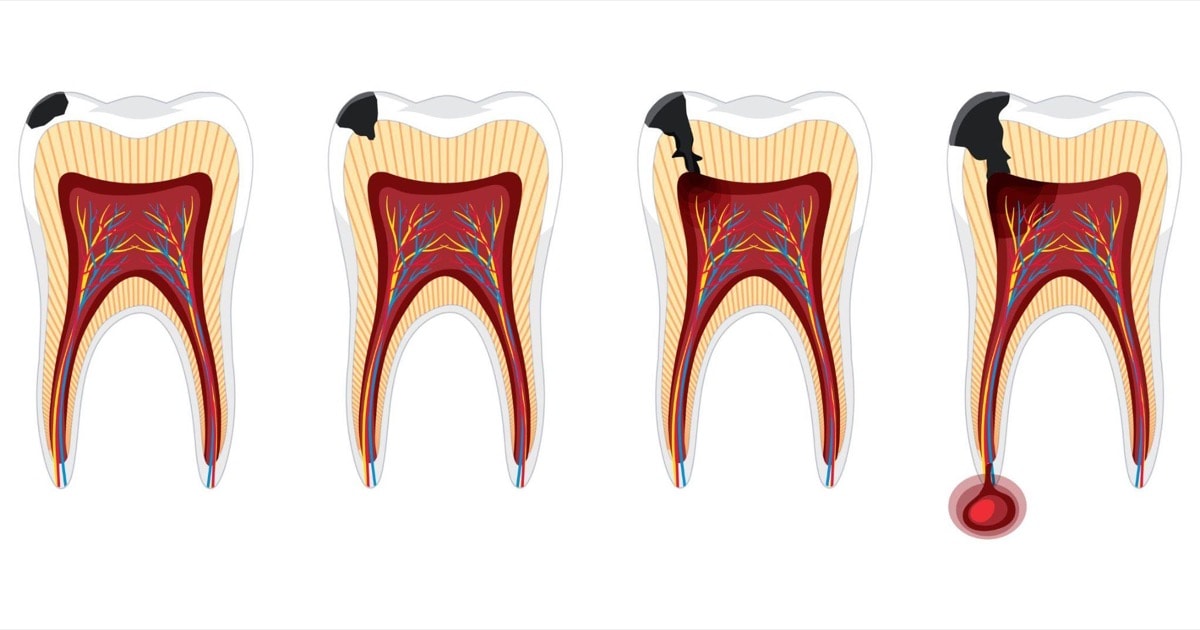
Early decay can look like a white or brown spot, and it darkens as it advances. A cavity can look like a dark spot in a groove, a visible hole or a dark patch showing through the enamel.
Decay does not heal on its own once a cavity has formed, and it can spread deeper into the tooth. Treating it earlier generally means a smaller repair. Our tooth decay page explains how it is treated.
What Not To Do
-
Don’t scrape or pick at a spot with a pin, a knife or any tool. This can damage the enamel and gums and push material under the gum.
-
Don’t use abrasive home remedies or scrubs to remove it, which can wear the enamel.
-
Don’t try whitening products on a dark spot. They won’t remove decay or tartar, and they can mask a problem.
-
Don’t ignore it. A spot that doesn’t go away should be looked at.
How a Dentist Finds Out What a Spot Is
At an examination, your dentist will usually:
-
Look closely at the spot, often with magnification and a light.
-
Check how it feels, for example, whether the surface is soft or hard.
-
Take X-rays, where appropriate, to see between the teeth and under the surface.
-
Ask about your diet, habits and any injury.
-
Look at the rest of your teeth and gums.
Treatment Depends On the Cause
-
Stain and tartar. A professional scaling and cleaning can remove tartar and surface stain.
-
Early decay. Your dentist may suggest ways to protect the tooth, such as fluoride, and monitor it.
-
A cavity. It can be treated with a filling. Our page on white fillings explains this.
-
Children’s back teeth. Dental sealants can protect the grooves.
-
A darkened or stained tooth. There are options such as bonding or veneers, depending on the cause.
-
A tooth darkened from inside. Your dentist will assess it and may suggest further treatment.
What Treatment Can and Can’t Do
Cleaning can remove tartar and much surface stain, but it may not remove all of it, and stain can return. A filling treats a cavity, but it does not stop new decay forming elsewhere. A darkened tooth may not return to its original colour. Results vary between patients, and your dentist will explain the benefits and limits of each option.
Reducing the Chance of Black Spots
-
Brush twice a day with fluoride toothpaste, and clean between your teeth daily.
-
Cut back on sugary snacks and drinks, and on tea, coffee and red wine if stain is a concern.
-
Avoid smoking.
-
Keep up regular check-ups and cleans, so tartar and early decay are picked up.
-
Ask your dentist about fluoride and sealants if you or your child are prone to cavities.
Black Spots On Teeth FAQs
Can I remove black spots at home?
No. Brushing and rinsing won’t remove tartar or decay, and scraping or scrubbing can cause damage. Have the spot examined.
Does every black spot mean a cavity?
No. Stain, tartar, old fillings and stained grooves can all look dark. Only an examination, sometimes with X-rays, can tell which it is.
Why does my child have black lines on their teeth?
A thin dark line along the gumline can be stain, which some children get even with good cleaning. Dark spots in the grooves can be decay. A dentist can tell them apart, so have it looked at.
Can tartar be black?
Yes. Tartar, especially below the gumline, can look dark brown or black. It is hard and cannot be brushed off, so it needs removing by a dentist or hygienist.
Book a Check-up in Cheltenham
Noticed a black spot on a tooth, or on your child’s? The next step is an examination.
At Captivate Dental, your dentist can look at the spot, take X-rays where needed, explain what it is and talk through any treatment before you decide on anything.
Call us on (03) 9553 1249 or book online to arrange a check-up.
We are at 36 Chesterville Road, Cheltenham VIC 3192, and we see patients from Cheltenham, Bentleigh, Highett, Hampton East, Moorabbin, Brighton East, Mentone and Black Rock.
This article is general information and does not replace advice from a registered dental practitioner. All dental procedures carry risks. Results vary between patients. Ask your dentist whether treatment is appropriate for you.