
Cracked Tooth: The Symptoms and What Treatment Involves

Cracked tooth symptoms can be inconsistent and are sometimes overlooked, especially when the crack itself isn’t visible in the mirror. A tooth can look completely normal while still causing sharp, unpredictable pain, which is part of why cracked teeth are sometimes missed for a while before being diagnosed.
This guide covers what a cracked tooth typically feels like, the different types of cracks, how they’re diagnosed, and what treatment usually involves depending on how severe the crack is.
Common Cracked Tooth Symptoms
A cracked tooth doesn’t always announce itself clearly. The most recognisable sign is pain when biting down that eases as soon as pressure is released, sometimes described as a sharp, brief zing rather than a constant ache. Other symptoms include:
- Sensitivity to hot, cold, or sweet foods that isn’t explained by an obvious cavity.
- Intermittent pain can sometimes make it difficult to determine which tooth is causing the discomfort
- Discomfort specifically when chewing on one side, or with certain foods more than others.
- In some cases, mild swelling of the gum near the affected tooth.
Because the pain can be intermittent and the crack often isn’t visible without magnification or specific testing, a cracked tooth is one of the more difficult dental problems to self-diagnose. An exam is generally needed to confirm what’s actually happening.
Hairline Crack in a Tooth: Is It Serious?
Not every hairline crack in a tooth is cause for concern. Very fine, shallow lines in the outer enamel, sometimes called craze lines, are common in adult teeth and are usually just a cosmetic feature caused by ordinary wear over the years. These don’t typically cause symptoms and often don’t need treatment beyond monitoring.
The difficulty is that a craze line and the early stage of a more significant crack can look similar without a proper exam. If a hairline crack is accompanied by pain when biting down, sensitivity, or any of the symptoms above, it’s worth having it checked rather than assuming it’s harmless.
Types of Cracks
Cracks in teeth aren’t all the same, and the type affects both the symptoms and the treatment:
- Craze lines – Shallow cracks limited to the enamel surface. Usually don’t cause any pain and are often just monitored.
- Cracked cusp – A crack affecting one of the pointed parts of the chewing surface, sometimes breaking off a piece of the tooth. This can cause sharp pain but often doesn’t involve the tooth’s nerve.
- Cracked tooth (extending toward the pulp) – The fracture line travels further inward, in some cases far enough to reach the soft tissue that houses the tooth’s nerve and blood supply. This is where pain when biting down and temperature sensitivity are most common.
- Split tooth – A crack that has progressed all the way through the tooth, separating it into distinct segments. This is a more advanced stage and generally has a more limited range of treatment options.
- Vertical root fracture – A crack that begins below the gumline in the root itself, sometimes producing minimal symptoms until an infection develops.
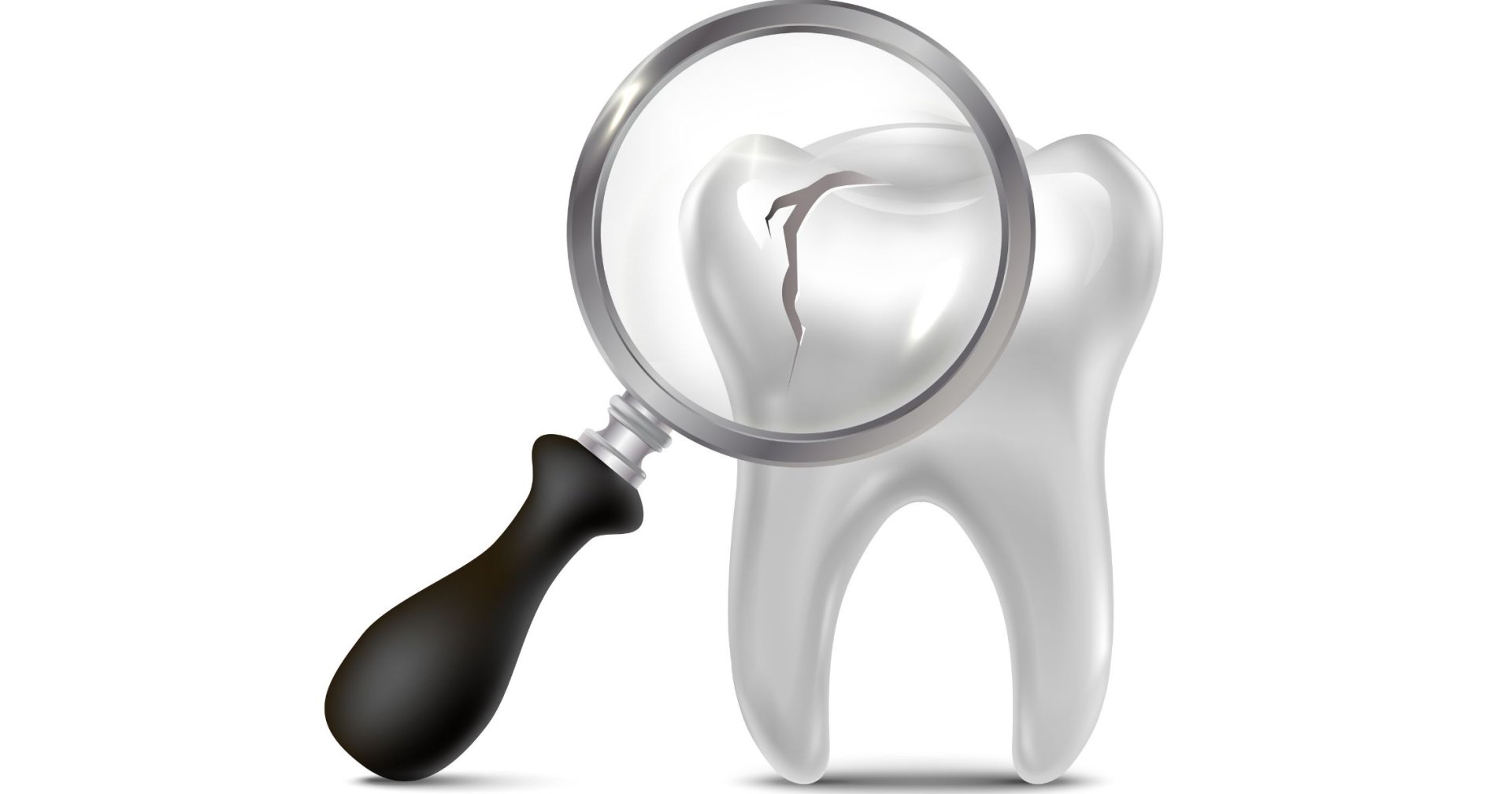
Why Pain When Biting Down Happens
When a tooth is cracked, biting down applies pressure that can cause the crack to flex or separate very slightly, which irritates the nerve inside the tooth. Releasing the bite lets the segments move back together, which is why the pain often disappears almost immediately once pressure is off. This on-and-off pattern is one of the more distinctive features of a cracked tooth, compared to pain that stays constant regardless of biting.
What Causes a Cracked Tooth
Cracks can develop for a number of reasons, and often it’s a combination of factors rather than one single cause:
- Biting down on something hard, such as ice, hard lollies, or a piece of bone.
- Grinding or clenching the teeth, particularly overnight.
- A large existing filling, which can weaken the remaining tooth structure around it.
- Trauma to the mouth or face.
- Age-related wear, since teeth naturally become more brittle over time.
Diagnosing a Cracked Tooth
Diagnosis usually starts with a discussion of symptoms, particularly when and how the pain occurs, followed by a visual exam, sometimes with magnification. A dentist may also ask you to bite on a small stick or device to try to reproduce the pain in a specific tooth, since this can help pinpoint which tooth is affected when the pain itself is hard to localise.
Cracks don’t always show up clearly on an X-ray, particularly when they run vertically, so a combination of methods is often needed rather than relying on any single test.
Cracked Tooth Treatment Options
Treatment depends on the type and extent of the crack, and there isn’t a single approach that applies to every case:
Craze lines typically don’t need active treatment, though they may be monitored over time.
A cracked cusp or minor crack can often be managed with a filling or dental bonding, restoring the shape of the tooth and covering the affected area.
A cracked tooth crown is a common recommendation when the crack is more significant. A crown covers the entire visible portion of the tooth, holding it together and reducing the chance of the crack spreading further under normal biting pressure. This doesn’t undo the crack, but it protects the tooth going forward.
Root canal treatment may be needed if the crack has reached the nerve tissue inside the tooth, particularly if there’s ongoing pain, sensitivity to temperature that lingers, or signs of infection. This is usually followed by a crown, since a tooth that’s had root canal treatment tends to become more brittle over time.
Extraction is sometimes the only realistic option for a split tooth or a tooth with a vertical root fracture, since these often can’t be held together in a way that restores long-term function. If extraction is needed, replacement options such as an implant, bridge, or denture are usually discussed as part of that conversation.
As with any dental treatment, results vary between patients depending on the extent of the crack and how early it was caught, and any surgical or invasive procedure carries its own risks worth discussing directly with your dentist.
Split Tooth: What It Means for Treatment
A split tooth is generally considered a more advanced outcome of an untreated or progressing crack. Once a tooth has fully separated into two segments, the options for saving the whole tooth are usually limited, and in many cases extraction of at least part of the tooth is recommended.
This is part of why earlier intervention, when a crack is still contained rather than fully split, tends to preserve more of the natural tooth.
What Happens When a Cracked Tooth Isn’t Treated
A crack that isn’t addressed can extend further into the tooth over time, particularly with continued biting pressure on the affected area. This can progress from manageable sensitivity to more constant pain, and in some cases to infection if the crack reaches the nerve.
A crack that reaches below the gumline is generally harder to treat than one caught while still confined to the crown of the tooth, which is part of why earlier assessment tends to preserve more options.
FAQ
What does a cracked tooth actually feel like?
The most common description is a sharp pain when biting down that eases quickly once you stop. Some patients also notice sensitivity to hot or cold that isn’t linked to an obvious cavity, or pain that seems to move around, making it hard to pinpoint the affected tooth.
Can a cracked tooth heal by itself?
No. Unlike bone, tooth structure doesn’t regenerate, so a genuine crack won’t repair itself over time. Symptoms can sometimes settle temporarily, which can create a false impression that the problem has resolved.
Will I definitely need a crown for a cracked tooth?
Not always. Minor cracks or a cracked cusp can sometimes be treated with a filling or bonding. A crown is more likely to be recommended for a more significant crack, particularly one that risks spreading further under normal biting force.
Is a hairline crack in a tooth always something to worry about?
Not necessarily. Fine craze lines limited to the enamel are common and usually harmless. The concern is that this can be difficult to tell apart from early symptoms of something more significant without an exam.
Why doesn’t my cracked tooth show up on an X-ray?
X-rays are better at detecting decay and bone changes than fine cracks, particularly vertical ones. Diagnosis often relies on a combination of your symptoms, a visual exam, and specific tests like biting on a small device to try to reproduce the pain.
Can a cracked tooth turn into a split tooth if I wait too long?
It’s possible for a crack to progress further into the tooth over time, particularly with ongoing biting pressure. This is part of why cracked tooth symptoms are generally worth having checked rather than monitored on your own.
Book an Assessment in Cheltenham
If you’ve noticed pain when biting down, unexplained sensitivity, or think you might have a cracked tooth, it’s worth having it looked at before the crack has a chance to progress further.
At Captivate Dental, we serve patients from Cheltenham, Moorabbin, Bentleigh, Hampton, Highett, and Brighton East.
Call us on (03) 9553 1249 or book online. Visit us at 36 Chesterville Road, Cheltenham.
Any surgical or invasive procedure carries risks. Before proceeding, consider seeking a second opinion from an appropriately qualified health practitioner.