
Dental Fillings: Types, Procedure and How Long They Last
A filling is a routine dental treatment, but “filling” covers more than one material and more than one situation. This guide covers what a filling actually does, the main materials used, what happens during the appointment, how long fillings last, and the signs that an existing filling may need attention.
What Fillings Do
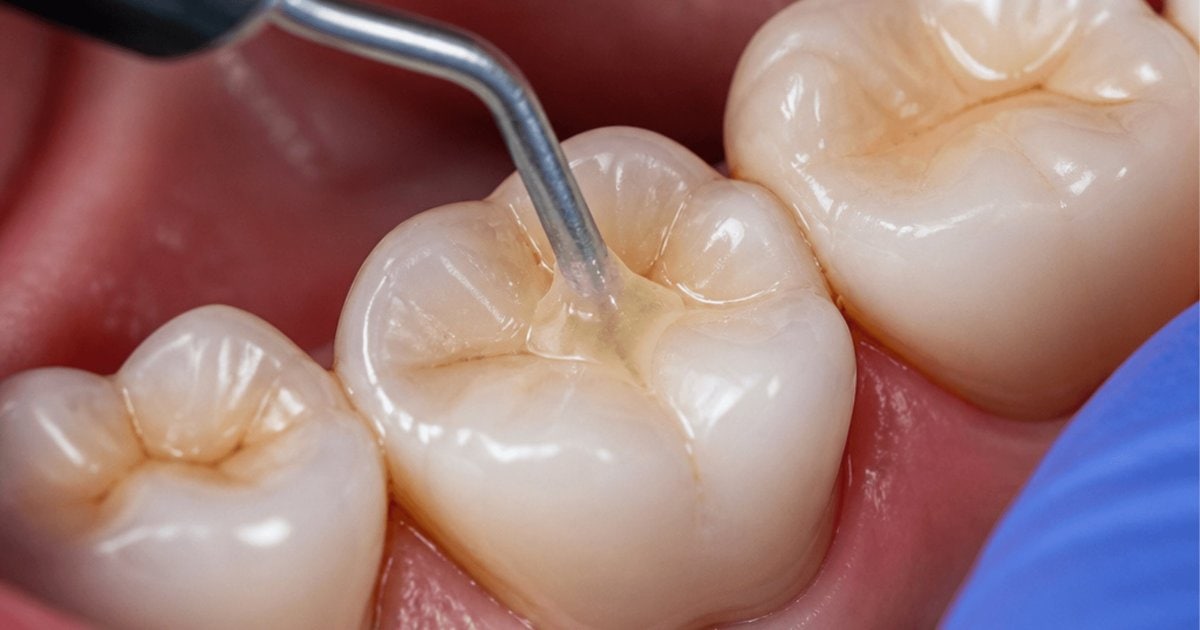
When decay is removed from a tooth, it leaves a gap in the tooth’s structure. A filling addresses three things at once: it removes the decayed material causing the problem and restores the tooth’s original shape. It also functions normally for biting and chewing and seals the area to help prevent bacteria from re-entering that part of the tooth.
Without a filling, the space left by decay remains open, which allows decay to continue affecting the tooth. Addressing it earlier, before decay spreads further into the tooth, keeps more treatment options available than addressing it later.
Types of Filling Material
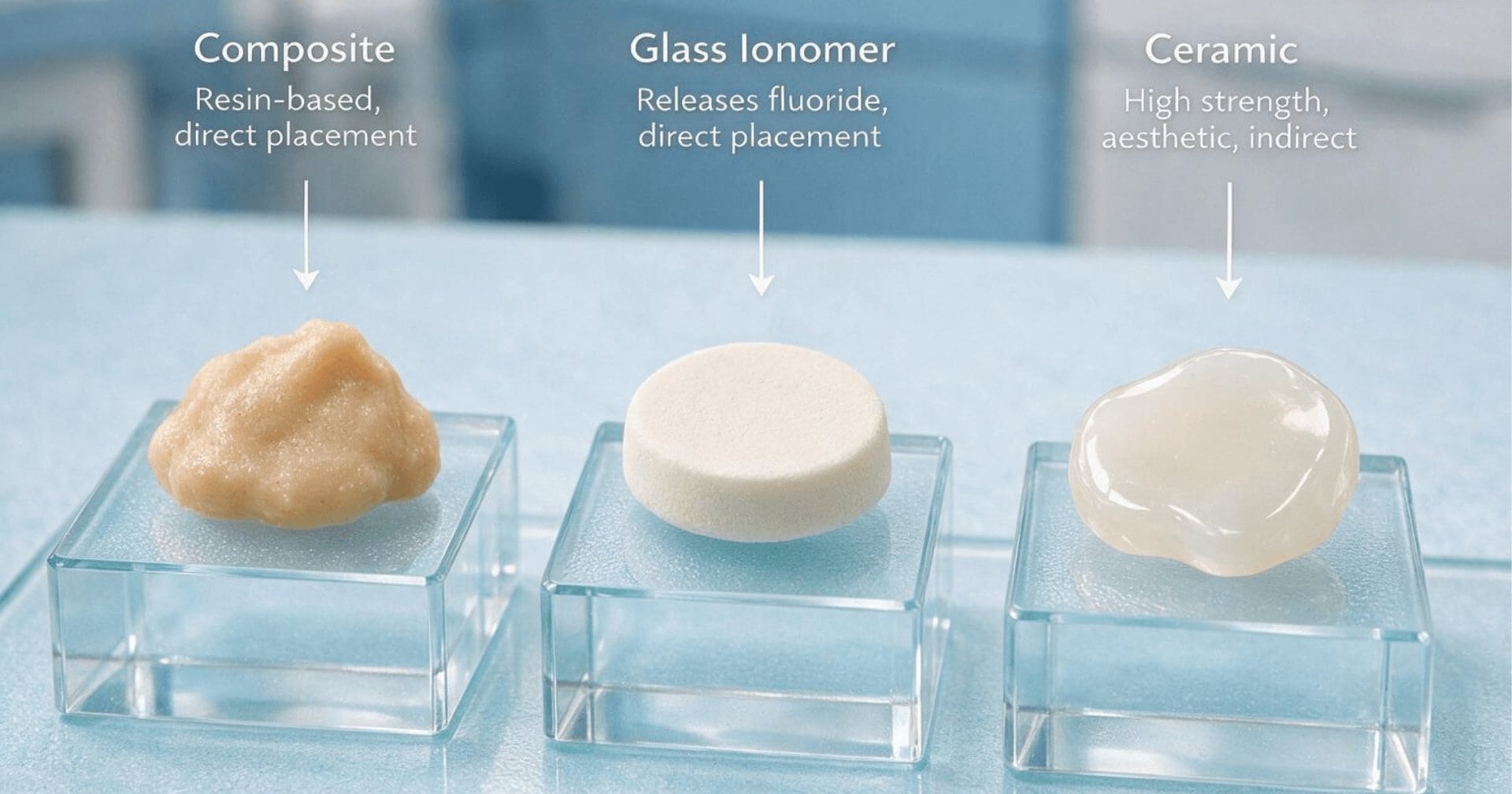
Composite is a tooth-coloured resin and glass mixture, bonded directly to the tooth and set with a curing light. It’s matched to the shade of the surrounding tooth, making it suited to visible areas including front teeth, and is used across a wide range of cavity sizes.
Glass ionomer is a tooth-coloured material that releases fluoride and bonds chemically to the tooth. It’s used in areas with less bite force, such as small cavities near the gum line, or in baby teeth, and has a shorter expected lifespan than composite or ceramic in load-bearing areas.
Ceramic fillings, including inlays and onlays, are fabricated in a dental laboratory rather than placed directly, and are used for larger cavities where more of the tooth structure needs to be restored than a direct filling is suited to.
Which material is appropriate depends on the size and location of the cavity, the biting forces acting on the tooth, and aesthetic considerations — this is assessed individually rather than being a single default choice for every situation.
What Happens During the Appointment
Numbing. Local anaesthetic is used to manage discomfort during the procedure. It doesn’t eliminate all sensation, and individual experiences vary.
Decay removal. The decayed part of the tooth is removed, and the remaining tooth is prepared to support the filling material.
Layering and curing. Composite filling material is placed in layers, with each layer set using a curing light before additional material is added. This builds up the filling to match the tooth’s original shape. Glass ionomer is placed and set in fewer steps. Ceramic restorations, being fabricated in a laboratory, involve a separate fitting appointment rather than being completed in a single visit.
Bite check. Once the filling is in place, your bite is checked to confirm the filling doesn’t sit higher than the surrounding teeth, adjusting as needed so the tooth feels even when biting down.
How Long Fillings Last
How long a filling lasts depends on the material, the size and location of the restoration, oral hygiene, and individual factors such as grinding or diet. There’s no single figure that applies to every filling.
For composite fillings specifically, an umbrella review of systematic reviews published in the Journal of Esthetic and Restorative Dentistry (Fernández et al., 2026) found conventional composite restorations had greater than 90% survival at 5 years, particularly with multi-step bonding techniques. This reflects research findings under favourable conditions, and outcomes vary from person to person depending on the factors outlined above—it isn’t a guarantee of a specific outcome for any particular filling.
What shortens a filling’s lifespan includes new decay forming at the edge of the filling, fracture from biting force or grinding, and the filling material wearing down over time with normal use. Regular check-ups are what allow your Cheltenham dentist to monitor a filling over time and catch these issues before they become bigger problems.
Signs a Filling Needs Replacing
- Sensitivity — new or worsening sensitivity to hot, cold, or sweet in a tooth with an existing filling can indicate the seal has broken down or decay has developed nearby.
- Rough edges — a filling that feels rough or catches on your tongue may have worn unevenly or begun to break down at the edges.
- Staining at the margin — a dark line where the filling meets the tooth may indicate that the margin of the filling is no longer sealed properly or that decay has developed around the restoration.
- Food catching — food consistently getting caught in the same spot can indicate a gap has formed between the filling and the tooth.
Any of these are worth having assessed rather than waiting to see if they resolve, since what looks minor from the outside isn’t always minor underneath.
Frequently Asked Questions
How long do dental fillings last?
This depends on the material and individual factors like oral hygiene and grinding. Research on composite fillings has found survival rates greater than 90% at 5 years under favourable conditions. However, this varies between patients — your dentist can discuss what to expect for your specific filling.
What’s the difference between composite and glass ionomer fillings?
The main difference is where each is suited: composite is used across a wider range of cavity sizes and locations, including visible teeth, while glass ionomer is reserved for specific situations like areas with less bite force or baby teeth, and doesn’t last as long under heavier load.
Does getting a filling hurt?
Local anaesthetic is used to manage discomfort during the procedure. It doesn’t eliminate all sensation, and individual experiences vary. Some sensitivity in the days afterwards is possible while the tooth settles.
How much does a filling cost?
This depends on the material used, the size of the cavity, and the tooth involved. An exam is what determines the specific treatment needed and the cost for your situation, rather than a fixed figure that applies to every filling.
How do I know if my filling needs replacing?
Signs include new sensitivity, a rough edge, staining at the margin, or food consistently catching in the same spot. Since what’s happening underneath isn’t always visible, having it assessed by a dentist is the way to confirm what’s going on rather than waiting to see if it resolves.
Dental Fillings in Cheltenham
If you think a filling might need attention, or it’s time for a check-up, we’re happy to take a look.
At Captivate Dental, we serve patients from Cheltenham, Moorabbin, Bentleigh, Hampton, Highett, and Brighton East.
Call us on (03) 9553 1249 or book online. Visit us at 36 Chesterville Road, Cheltenham.
Any surgical or invasive procedure carries risks. Before proceeding, consider seeking a second opinion from an appropriately qualified health practitioner.