
Sensitive Teeth: Why They Hurt and What to Do

That sharp, sudden pain when you sip something cold or breathe in cool air — tooth sensitivity is immediately recognisable. Most people have felt it at some point, and most people put up with it longer than they should.
Sensitivity is a symptom with a cause, and the cause is almost always something your Cheltenham dentist can identify and treat.
Here’s what’s behind it and what to do about it.
What Is Tooth Sensitivity?
The pain of tooth sensitivity originates in the dentine — the layer that sits beneath the enamel and surrounds the tooth’s nerve. Dentine is filled with microscopic tubules that run directly to the nerve. When dentine becomes exposed, these tubules are no longer insulated.
Temperature changes, sweet foods, acidic drinks, and even cold air can trigger a sharp response when they travel through them.
The exposure occurs in two ways: the enamel wears down, leaving dentine unprotected on the crown of the tooth, or the gum pulls back, exposing the root surface, which has no enamel covering at all. Both produce the same result — a tooth that reacts to stimuli it previously handled without issue.
Common Causes of Sensitive Teeth
Enamel erosion
Repeated acid exposure gradually dissolves enamel. The sources are usually dietary — soft drinks, sports drinks, citrus, vinegar-based foods — but stomach acid from reflux is a significant cause that often goes unrecognised.
Enamel doesn’t regenerate once it’s gone, so unchecked erosion leads to progressively worse sensitivity.
Gum recession
When the gums recede, the root surface becomes exposed. Unlike the visible part of the tooth, the root doesn’t have a hard enamel coating—it’s covered by a thin layer called cementum that offers much less protection. Root sensitivity tends to be sharper and more localised than general dentine sensitivity.
Teeth grinding
Bruxism wears down enamel steadily, often without the patient realising. The first signs are usually flattened or chipped teeth, morning jaw soreness, or a partner noticing grinding sounds at night. Sensitivity from grinding tends to be diffuse — felt across multiple teeth rather than one specific spot.
Cracked tooth
A crack in the tooth can let hot, cold, or pressure reach the nerve inside. This often causes a sharp pain when biting or when eating or drinking something hot or cold. If sensitivity is concentrated in one tooth and triggered by biting pressure, a crack is worth investigating.
Worn or failing fillings
Old fillings can crack, wear down, or develop gaps at their edges. These gaps expose the dentine underneath and can allow bacteria to reach the nerve. Sensitivity around an existing filling — particularly one that’s been in place for years — is worth having checked.
Acidic diet
Even without significant erosion, a consistently acidic diet keeps enamel softened for extended periods, increasing sensitivity during and after eating.
Recent dental treatment
Whitening, fillings, and scaling can all cause temporary sensitivity. The nerve settles over days to weeks. If sensitivity from a procedure worsens rather than improves, or persists beyond a month, it needs to be reviewed.
Home Remedies That Can Help
Desensitising toothpaste
Potassium nitrate and stannous fluoride both help relieve sensitive teeth, but they work differently. Potassium nitrate reduces the nerve’s response, while stannous fluoride seals the tiny tubules that lead to the nerve. Neither works overnight. Consistent use over four to six weeks is needed to notice a meaningful difference.
Applying a small amount directly to the sensitive area after brushing, rather than rinsing it off, increases contact time and improves results.
Soft-bristled toothbrush
If you’re using a medium or hard brush, switch to a different one. Stiff bristles remove enamel at the gumline and accelerate recession over time. Gentle circular motions rather than back-and-forth scrubbing are more effective and less damaging.
Diet adjustments
Reduce how often you consume acidic food and drink. When you do, rinse with water afterwards and wait at least 30 minutes before brushing.
These measures manage mild sensitivity and slow progression. They don’t fix structural problems — a crack, significant decay, or active gum disease needs professional treatment regardless of what home care you’re doing.
When You Should See a Dentist
Don’t wait if:
- Sensitivity is concentrated in one tooth — this suggests a structural cause like a crack, cavity, or failing restoration
- The pain persists after the cause is removed and lasts for more than 30 seconds.
- Sensitivity is triggered by heat as well as cold
- It’s getting worse over time rather than staying the same
- You have sensitivity alongside bleeding gums, visible cracks, or a darkened tooth
Mild sensitivity across multiple teeth that responds to desensitising toothpaste within a few weeks is generally manageable at home. Anything that doesn’t follow that pattern is worth having looked at.
Professional Treatment Options
Fluoride varnish
Applied directly to sensitive areas, professional fluoride varnish strengthens enamel and seals exposed dentinal tubules more effectively than home fluoride products. It’s a simple, non-invasive first step for generalised dentine sensitivity.
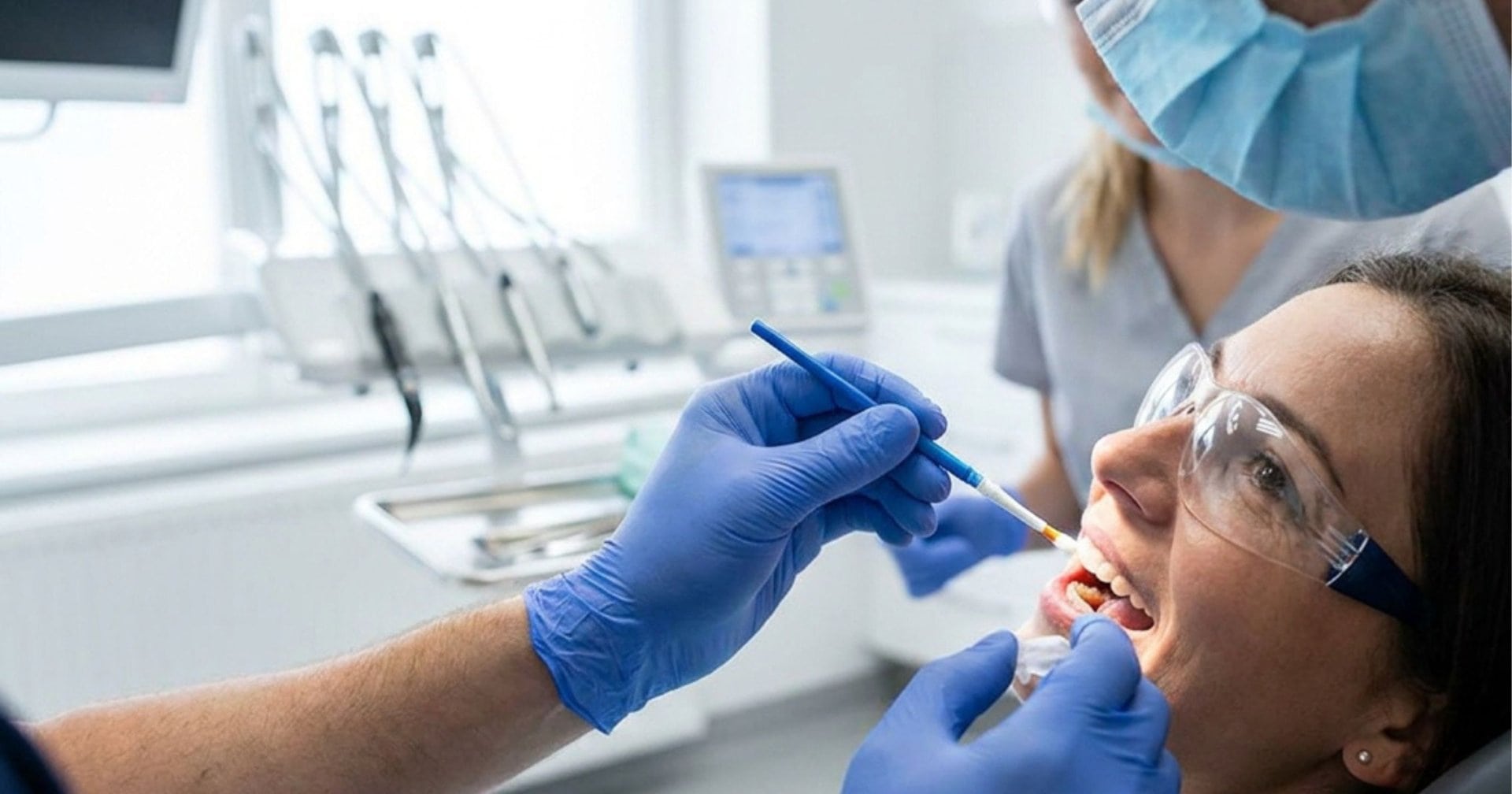
Dental bonding
Where enamel loss or root exposure is localised to specific teeth, a bonding agent can be applied to seal the exposed surface. This provides a durable barrier between the dentine and external stimuli and can significantly reduce sensitivity in targeted areas.
Nightguard
For patients with bruxism, a custom-fitted nightguard protects the enamel from further wear during sleep. It doesn’t stop grinding but absorbs the force before it reaches the teeth.
Gum graft
Where gum recession has exposed a significant portion of the root and is causing persistent sensitivity, a gum graft covers the exposed surface and restores the protective tissue. It’s a surgical procedure but one with a generally straightforward recovery and lasting results.
Treating the underlying cause
Where sensitivity is driven by decay, a cracked tooth, or a failing filling, the restoration is the treatment. Addressing the structural problem removes the pathway to the nerve and directly resolves the sensitivity.
Frequently Asked Questions
Why are my teeth sensitive even though I brush twice a day?
Brushing removes plaque but doesn’t protect against enamel erosion from acid, gum recession, or grinding — all of which can cause sensitivity regardless of how consistently you brush. The cause needs to be identified before the right solution can be applied.
Can sensitive teeth get worse over time?
Yes, if the underlying cause isn’t addressed. Enamel erosion is progressive, gum recession tends to continue without intervention, and untreated decay advances toward the nerve. Sensitivity that’s worsening rather than staying stable is a reason to book an appointment instead of waiting.
Is it typical for teeth to remain sensitive following whitening?
Temporary sensitivity after whitening is common and usually settles within a few days. If your teeth are already sensitive, tell your Cheltenham dentist before you begin whitening. Using a desensitising toothpaste for a few weeks beforehand can make the treatment more comfortable.
How long does it take for desensitising toothpaste to work?
Most patients notice improvement after four to six weeks of consistent daily use. Applying it directly to sensitive areas after brushing, without rinsing, gives the best results. If there’s no improvement after six weeks, a dental assessment is the next step.
Can a nightguard fix tooth sensitivity?
A nightguard doesn’t reverse existing enamel loss, but it stops the grinding that’s causing it. For bruxism-related sensitivity, a nightguard can slow further damage and, when combined with fluoride treatment, reduce sensitivity over time.
Sensitive Teeth Treatments in Cheltenham
If sensitivity is getting in the way of eating, drinking, or everyday comfort, it’s worth finding out what’s causing it.
Call us on (03) 9553 1249 or book online.
Visit us at 36 Chesterville Road, Cheltenham. We serve patients from Cheltenham, Moorabbin, Bentleigh, Hampton, Highett, and Brighton East.