
Gum Disease: How to Spot It Early and What Treatment Involves
Most people don’t realise they have gum disease until it’s already progressed. It doesn’t usually hurt in the early stages, which is exactly what makes it so easy to miss. By the time it becomes obvious, some damage may already be done.
The good news is that catching it early makes a significant difference — both in how straightforward treatment is and in what outcomes you can expect. This guide covers what gum disease actually is, how to recognise the early signs, and what treatment looks like depending on how advanced it is.
What Is Gum Disease?
A bacterial infection of the supporting tissues around the teeth, gum disease begins when plaque builds up along and under the gumline. If it isn’t removed consistently through brushing and flossing, it hardens into tartar, which can no longer be cleared with a toothbrush alone.
From there, the bacteria trigger an inflammatory response in the gum tissue. Left unaddressed, that inflammation progresses — moving from the surface of the gums deeper into the structures that hold your teeth in place.
It develops in stages, and where you sit on that spectrum determines what treatment looks like and what realistic outcomes are.
Early Signs of Gum Disease
It’s common for the earliest symptoms of gum disease to go unnoticed. Most people assume some bleeding when brushing is normal, or that tender gums are just temporary. They rarely are.
Signs to watch for include:
- Bleeding gums when brushing or flossing — even light bleeding is not normal
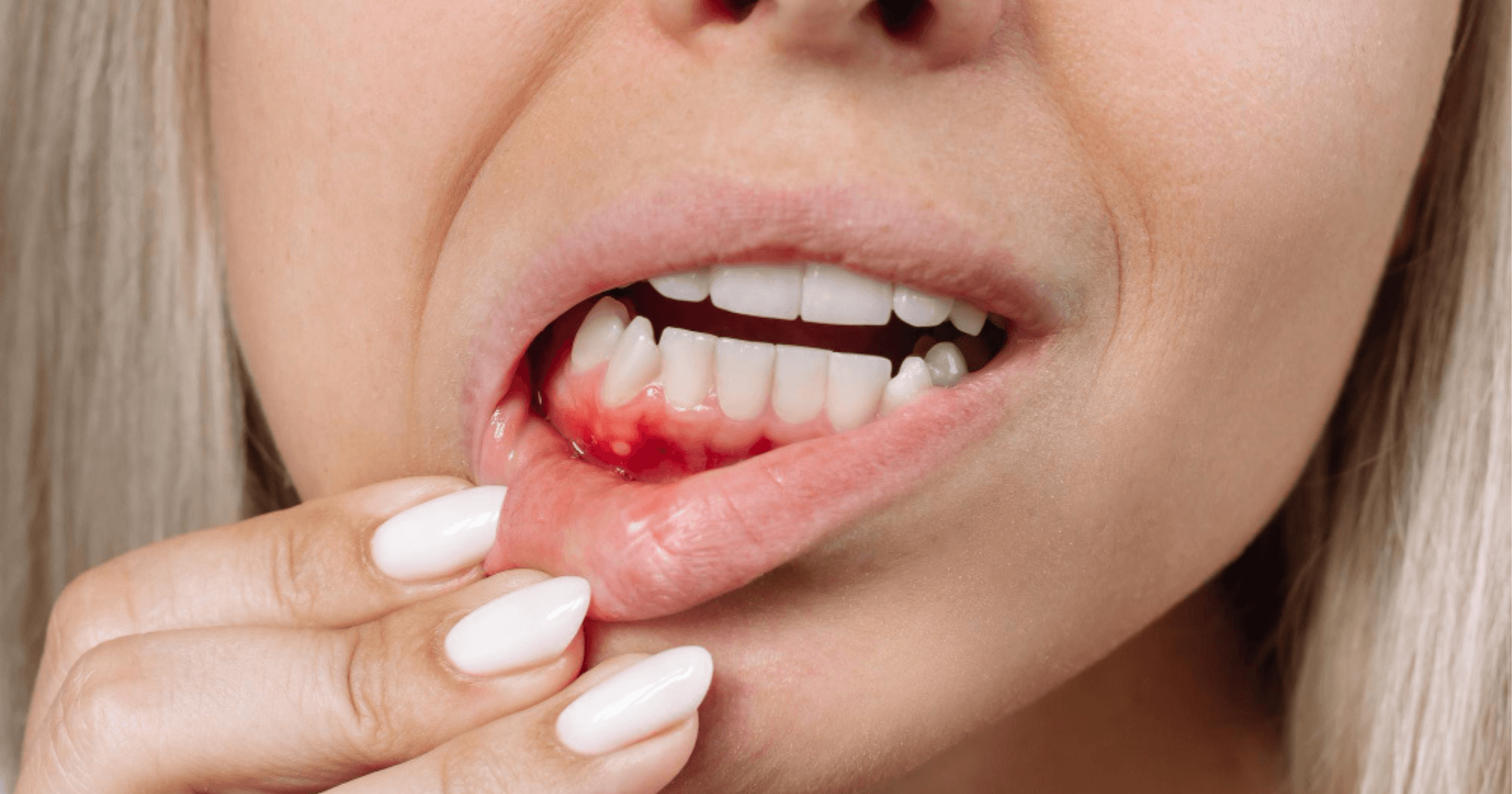
- Red, swollen, or puffy gums that look different from their usual pale pink colour
- Persistent bad breath that doesn’t clear up with brushing
- Tender gums that feel sensitive to touch or pressure
- Slight gum recession — teeth beginning to look longer than they used to
- Gums that recede from the teeth, forming small pockets
In the early stages, there is usually no pain. That’s the problem. Gingivitis doesn’t announce itself with discomfort, so it often goes untreated until it becomes something more serious.
If you’ve noticed any of these signs — even just one — it’s worth having your gums assessed.
Gingivitis vs Periodontitis: What’s the Difference?
Understanding where you sit on the spectrum affects what treatment you’ll need and what to expect from it.
Gingivitis affects only the gum tissue. The gums are inflamed, but the underlying bone is unaffected. Because no structural damage has occurred, it responds well to professional dental cleaning combined with consistent home brushing and flossing.
Many patients see a noticeable improvement within a few weeks of treatment and improved home care. It is entirely reversible.
Periodontitis means the infection has moved below the gumline and begun to affect the bone and connective tissue supporting your teeth. Pockets that form between teeth and gums provide spaces where bacteria can accumulate, beyond the reach of home care. Over time, teeth can loosen or shift.
Periodontitis is not reversible — the bone loss that occurs doesn’t grow back. However, with appropriate treatment and regular maintenance, it can be effectively managed.
The goal is to stabilise the condition, eliminate active infection, and prevent further deterioration.
The distinction matters because the treatment approach differs significantly between the two stages.
Risk Factors for Gum Disease
Gum disease isn’t caused solely by poor brushing habits. Several factors increase a person’s susceptibility:
- Smoking and tobacco use — Smokers are significantly more prone to gum infection and respond less effectively to treatment. Smoking also masks some of the early warning signs, such as bleeding.
- Diabetes — Uncontrolled blood sugar affects the body’s ability to fight infection, including gum infection. Gum disease and diabetes have a well-documented two-way relationship.
- Family history — Genetics play a role. Some people are more susceptible to periodontitis regardless of how well they care for their teeth.
- Certain medicines — Some medicines reduce saliva flow or cause gum tissue changes, increasing susceptibility to bacterial buildup.
- Hormonal changes — including pregnancy, menopause, and hormonal shifts — can make gum tissue more reactive and sensitive to plaque.
- Poor nutrition — A diet low in nutrients — particularly vitamin C — can compromise the immune response and slow gum tissue repair.
Knowing your risk factors allows you and your Cheltenham dentist to decide on appropriate assessment frequency and monitoring.
What Gum Disease Treatment Involves
Treatment is matched to the severity of what’s present. There’s no single approach — the right treatment depends on how far the disease has progressed.
Early-stage (gingivitis)
A professional scale and clean removes the plaque and tartar that home brushing can’t reach. This is paired with oral hygiene coaching — reviewing your technique, identifying where you’re missing, and adjusting your routine.
For most patients at this stage, this is enough to resolve the inflammation entirely.
Moderate-stage (early periodontitis)
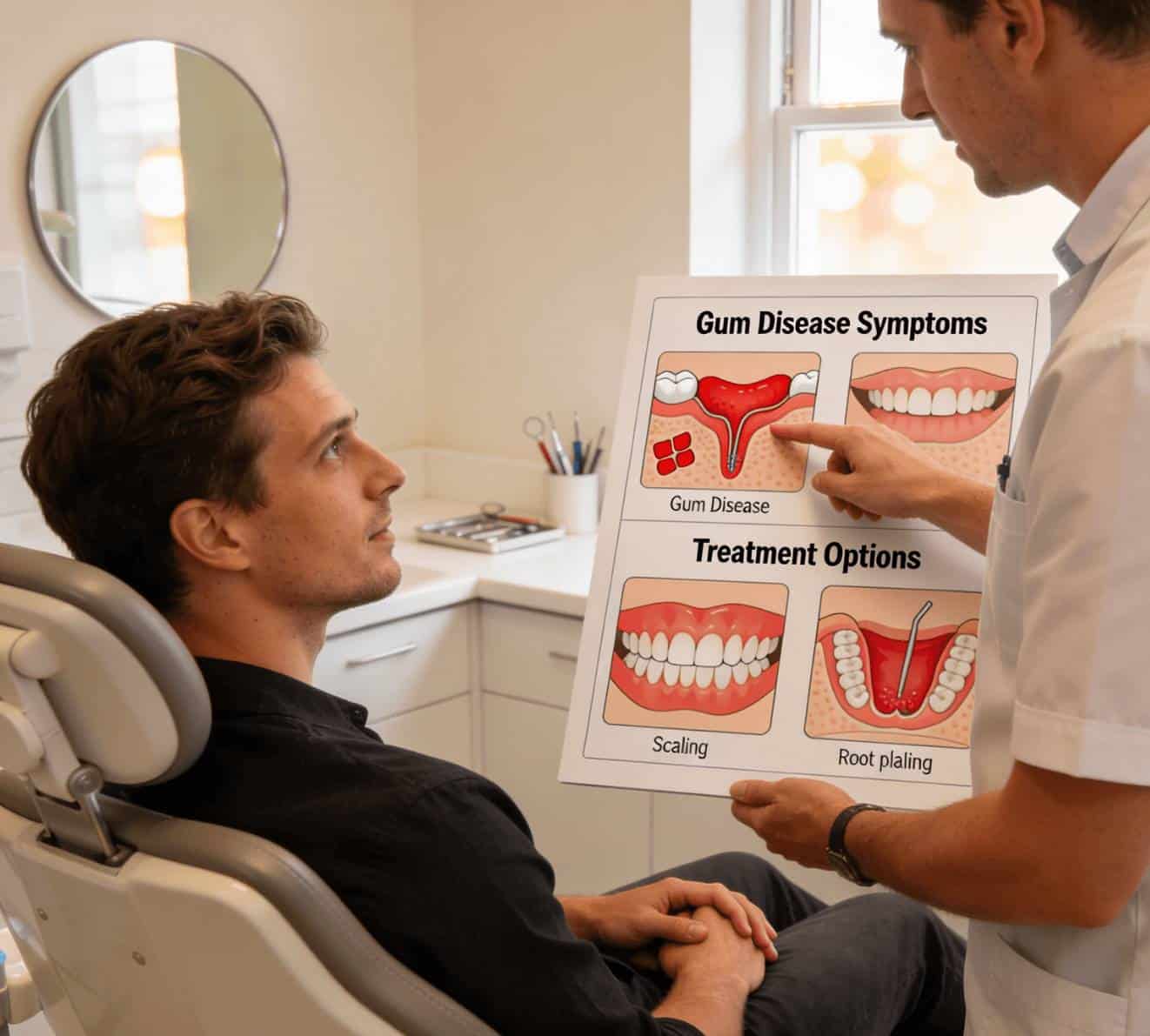
This condition is typically treated with scaling and root planing. This goes deeper than a routine clean, targeting tartar and bacteria below the gumline and smoothing the root surfaces to discourage future bacterial attachment.
It’s typically done under local anaesthetic for comfort and may be completed across multiple appointments.
Advanced-stage
Where pockets are deep and bone loss is significant, surgical intervention may be necessary to access and clean areas that scaling alone can’t reach.
Following active treatment, a structured maintenance programme is essential — typically involving more frequent review appointments to monitor pocket depths, remove buildup, and catch any signs of recurrence early.
Treating gum disease early can reduce the need for more invasive procedures.
Frequently Asked Questions About Gum Disease
Can gum disease be cured?
Gingivitis can be fully reversed with professional treatment and consistent home care. Periodontitis cannot be cured — the structural damage is permanent — but it can be managed effectively to prevent further progression.
Is gum disease contagious?
Gum disease–causing bacteria may be transmitted via saliva. Shared utensils or close contact can transfer these bacteria, though whether gum disease develops depends on a range of individual factors.
Is there a link between gum disease and heart health?
Research has shown a link between periodontal disease and certain systemic health conditions, including cardiovascular disease. The exact nature of the relationship is still being studied, but the connection is well-recognised in the dental and medical communities.
How often should I have a cleaning if I have gum disease?
For patients being treated for or monitored for periodontitis, three to four-monthly appointments are common. The frequency is determined by how well the condition is being managed and how quickly tartar accumulates.
Will my gums grow back after treatment?
Receded gum tissue caused by periodontal disease does not regenerate naturally. Treatment focuses on stopping further recession and stabilising what remains, not on restoring what’s already been lost.
Gum Disease Treatment in Cheltenham
If your gums bleed when you brush, look different than usual, or you haven’t had them assessed recently, it’s worth booking in.
At Captivate Dental, we assess gum health as part of every examination. For patients in Cheltenham and the surrounding areas — including Moorabbin, Bentleigh, Hampton, Highett, and Brighton East — early assessment is the most straightforward way to keep treatment simple and outcomes manageable.
Call us on (03) 9553 1249 or book online. You’ll find us at 36 Chesterville Road, Cheltenham.